Guide,
Longboarding Tricks to Learn First
Balance drills, pivots, manuals and cross-steps come before slides and freestyle; carving teaches the edge control all of them use.
Foundations before flair
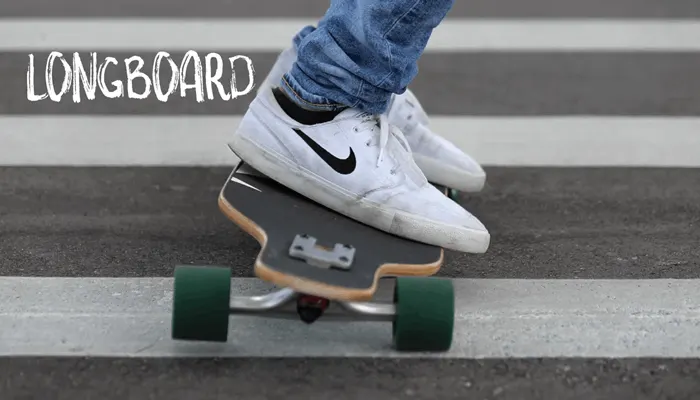
Begin with balance drills on a stationary board: shift from heel to toe, lift the front foot, put the weight back. Then move to pivots (turning the board under you at a standstill), manuals (balancing on the back wheels) and cross-steps. None of these needs speed, and all of them make later tricks less frightening.
A longer deck helps here. It gives the feet room to move, which is why dancing steps feel natural on a board that would be awkward for flip tricks.
Carving and small slides
Carving teaches edge control, and edge control is what every slide is built on. Once carving feels easy, try a small standing slide at slow speed on smooth ground, with gloves on.
Do not chase the slide you saw in a video. A short, controlled slide that stops you is worth more than a long one that ends in the gravel.
Match the board to the trick
Freeride, dancing and cruising setups all feel different. A symmetrical, wider deck with softer wheels suits dancing and slides; a flexier deck suits carving; a stiff, narrow one wants speed. Choose the shape for the tricks you actually want to learn, not the ones that look best in a photo.