Guide,
How to Slow Down a Longboard with Confidence
Foot braking on flat ground, wide carves to bleed speed, and the protective gear that makes both calmer to learn.
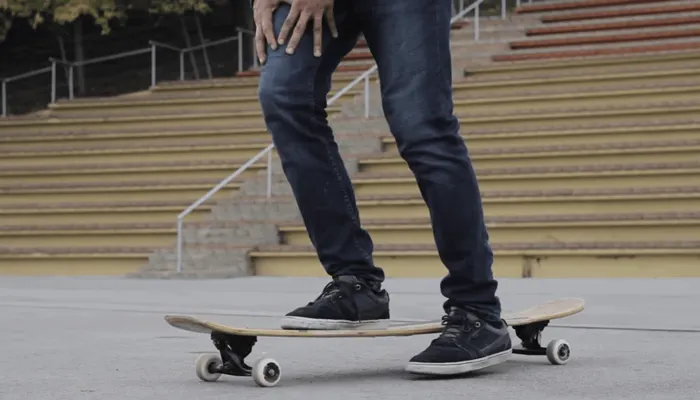
Start with the foot brake
Learn it on flat ground at walking pace. Shift your weight onto the front leg, lower the back foot until the sole just touches the surface, and let friction do the work. Press gradually: a sudden drop of the foot twists the board away from you.
Flat shoes with a smooth sole grip the road predictably. Worn-out soles are fine for practice; slippery new ones are not.
Carve to shed speed
Wide, smooth S-turns across the road cost speed without any hard stopping, and they are the first tool to reach for when a hill gets steeper than expected. Keep the turns long and the shoulders level; jerky movements are what unsettle a longboard at speed.
Before moving to a real slope, check that you can carve from one edge of an empty car park to the other and stop within a few steps.
Gear and habits
A helmet and wrist guards come first, knee pads next. Slides and faster downhill control are skills that include falling, and padding turns those falls into something you can laugh at.
Confidence here comes from repeating a technique until it is boring, not from going faster. If a hill makes you reach for the brake before you start, pick a gentler one.